
Where Owning, Selling, or Using a Key Programmer Is Now a Crime
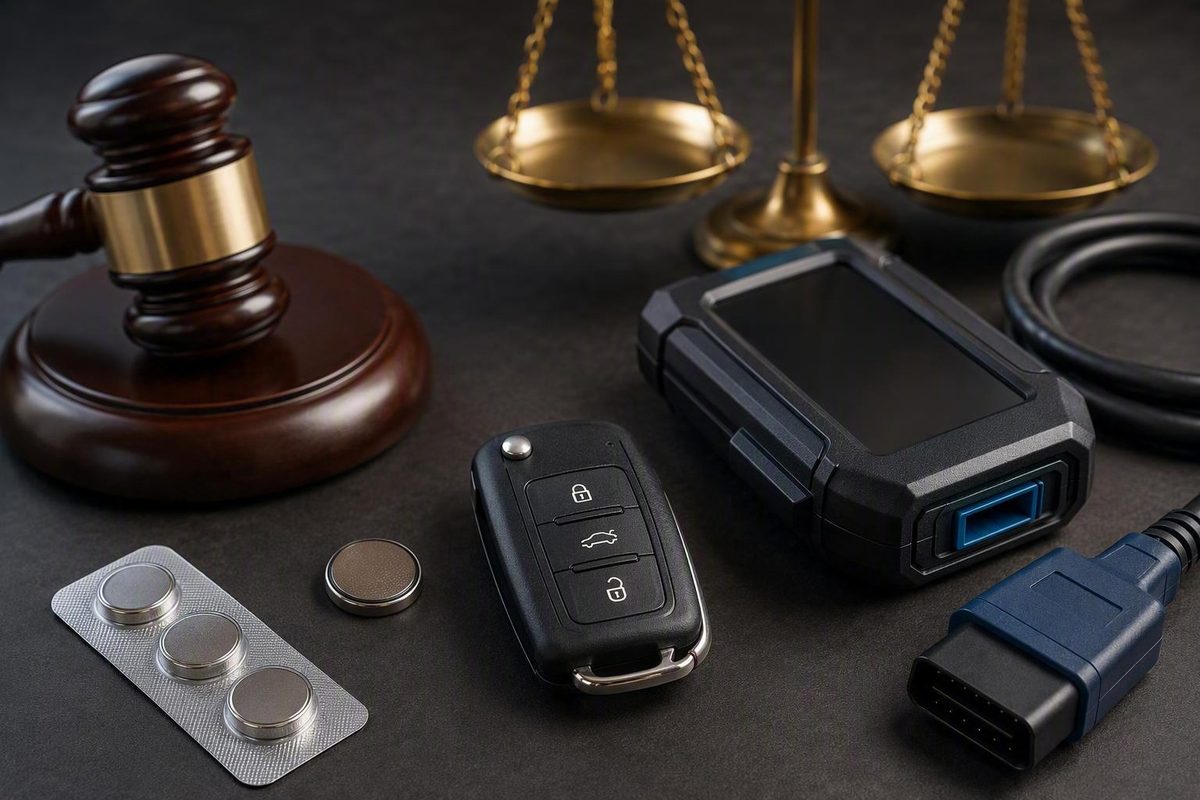
Louisiana now criminalizes selling or transferring key programmers, California treats them as burglary tools with intent, and New York wants to ban possession.
Only two states have enacted laws that name key programmers by function, and neither bans owning one. Louisiana’s Act No. 578, effective August 1, 2026, makes it a crime to knowingly manufacture, sell, offer to sell, or transfer a motor-vehicle key-programming or key-emulating device or a relay-attack device unless you work for a listed trade; possession alone is not a violation. California’s AB 486, signed October 6, 2025 as Chapter 367, added key-programming devices, key-duplicating devices, and signal extenders to the Penal Code Section 466 burglary-tools list, so possession is a misdemeanor only when paired with intent to commit burglary. New York’s S8883 would go further and restrict possession itself with Class E felony exposure, but as of its June 5, 2026 referral to the Rules Committee it is a bill, not law. Delaware and North Carolina have older vehicle-tool statutes that never mention electronic programmers. For every other state, this review found no programmer-specific statute, which is not the same as finding the device unrestricted.
Pick your state; the result below shows what is restricted, the standard, the penalty, and any pending bill.
Key Programmer Legality Checker
Louisiana: Act No. 578 (R.S. 14:406) makes it a crime to knowingly manufacture, sell, offer to sell, or transfer a key-programming, key-emulating, or relay-attack device unless you fall in a listed trade. Possession alone is not a violation; criminal possession requires circumstances indicating intent to commit vehicle theft or unauthorized entry.
- Penalty
- Up to $1,000 fine, up to six months, or both
- Effective
- August 1, 2026 (enacted)
- Exempt
- Law enforcement, NICB employees, employees of licensed vehicle or lock dealers, mechanic shops, locksmith companies, repossession agencies; authorized holders must report loss or theft within 48 hours
- Pending
- HB 607 (2024) proposed automotive-locksmith endorsements for fob programming; enactment not established
- Source
- Act No. 578 (HB1104)
Sources: enrolled Louisiana Act 578; California AB 486 bill record; Delaware Code Title 21 Ch. 46; N.C. G.S. 14-56.4; official NY S8883, OH H.B. 519, NJ S3390 and DE HB 351 records as cited in the article. "No programmer-specific law verified" means this review confirmed nothing either way; general burglary-tools and theft statutes may still apply. Not legal advice.
All seven states with a verified provision or pending bill
| State | Status | Standard | Penalty |
|---|---|---|---|
| Louisiana | Enacted, Aug 1, 2026 | Sale/transfer banned outside trades; possession needs intent | Up to $1,000 / 6 months |
| California | Enacted, signed Oct 6, 2025 | Possession with intent to commit burglary (PC 466) | Misdemeanor |
| Delaware | Legacy law; HB 351 pending | Listed vehicle tools; programmers not named | Class E felony (listed tools) |
| North Carolina | Legacy law | Possession with criminal intent; programmers not named | Class 1 misd.; Class I felony repeat |
| New York | S8883 pending | Would restrict possession itself | Class E felony; fines to $5,000 (proposed) |
| Ohio | H.B. 519 pending | Electronic tools with theft intent | 4th-degree felony (proposed) |
| New Jersey | S3390 (2022–23) not enacted | Unlawful purpose required | 4th-degree, 18 months / $10,000 (proposed) |
Ownership, possession with criminal intent, use on a vehicle, paid programming, manufacture, sale, and transfer are separate legal questions. Louisiana regulates transactions and leaves possession to an intent test. California regulates possession with intent and says nothing about sales. A locksmith licensing rule can govern paid work without making the tool contraband. Keep those layers apart and most of the confusion around an Autel, Xhorse, or Lonsdor purchase disappears.
Louisiana Restricts Selling and Transferring, Not Owning
Act No. 578 enacted R.S. 14:406 and took effect August 1, 2026, as confirmed by the official HB1104 history. It expressly covers motor-vehicle key-programming or key-emulating devices and relay-attack devices.
The offense is knowingly manufacturing, selling, offering to sell, or transferring a covered device unless an exception applies. The exceptions cover law-enforcement officers, National Insurance Crime Bureau employees, and employees of licensed vehicle or lock dealers, mechanic shops, locksmith companies, and repossession agencies.
Possession is handled differently. The act states that possession alone does not constitute a violation. Criminal possession requires circumstances indicating intent to commit motor-vehicle theft or unauthorized entry. The enrolled act gives no examples of what facts prove that intent.
A violation carries a fine of up to $1,000, imprisonment for up to six months, or both. Authorized holders must report loss or theft of a covered device within 48 hours.
The practical split for a Louisiana reader: an owner who already has a programmer for their own car is not committing a crime by keeping it. That same owner selling it on a marketplace, or handing it to a friend, is transferring a covered device without an exemption. A mobile locksmith who is an employee of a licensed locksmith company is inside the exemption for the transaction rule but still carries the 48-hour reporting duty.
California Lists Programmers as Burglary Tools Only With Intent
AB 486 was signed October 6, 2025, became Chapter 367, and amended Penal Code Section 466. It added key-programming devices, key-duplicating devices, and signal extenders to the list of burglary tools.
The element that matters is intent. Section 466 punishes possession of a listed item with intent to commit burglary. The bill record does not establish a blanket possession ban or a sales ban, and the offense is a misdemeanor.
The official record available for this review does not supply the complete current codified wording, every defense or exception, or a precise operative date. Before buying, carrying, or selling covered equipment in California, read the current text of Section 466 rather than the bill page.
Vehicle-owner authorization and service records help distinguish legitimate work from criminal purpose under an intent-based statute. They do not settle California’s separate locksmith licensing requirements, covered below.
New York S8883 Would Criminalize Possession Itself
New York is the state to watch because its bill targets possession, not just sale. S8883, in the 2025–2026 session, would regulate the manufacture, sale, and possession of key-programming, key-emulation, and relay-attack devices; provide specified professional exemptions; create Class E felony exposure; and require loss or theft reporting within 48 hours, with fines up to $5,000.
The official bill page shows it was committed to the Rules Committee on June 5, 2026. That is not enactment. There is no chapter number, no executive action, and no effective date to rely on. A New York owner who bought a programmer last year is not, on the record cited here, committing a felony today.
If S8883 passes in its current form, the difference from Louisiana is stark: Louisiana makes an unexempted sale a misdemeanor-level offense with a $1,000 cap, while New York would attach felony exposure to the fact of possession outside an exemption.
Delaware and North Carolina Have Older Tool Laws That Never Name Programmers
Delaware Code, Title 21, Chapter 46 regulates motor-vehicle master keys and possession of listed tools: a manipulative key or device, key-cutting device, lock pick or lock-picking device, or hot wire designed or capable of opening or starting a vehicle. Possession of a listed tool is a Class E felony, subject to exceptions for specified dealers, rental businesses, locksmiths, officials, law-enforcement personnel, qualifying repossession workers, and on-premises replacement-key businesses acting under statutory conditions.
Delaware’s separate master-key offenses, covering manufacture, transport, distribution, advertising, and sale, carry a fine of up to $2,000, imprisonment for up to five years, or both. Authorized master-key holders must file a descriptive inventory every six months; knowing noncompliance carries a maximum $2,300 fine, five years’ imprisonment, or both.
None of that expressly names an electronic key-fob programmer. Whether a given programmer is a “device” capable of starting a vehicle under this chapter is a question of the tool’s design and function that the statute does not answer.
North Carolina G.S. 14-56.4 takes an intent-based approach. It prohibits possession of a motor-vehicle master key, manipulative key, lock-picking device, or hot-wiring device with intent to commit a felony, larceny, or unauthorized use of a motor-propelled conveyance. It separately prohibits willfully buying, selling, or transferring listed equipment for use in a manner the section prohibits. A first violation is a Class 1 misdemeanor; a second or subsequent violation is a Class I felony.
Conditional exemptions cover new- and used-vehicle dealers, rental agents, locksmiths, towing-service employees, automotive-repair employees, lawful repossession activity, law-enforcement officers, and businesses using on-premises equipment to make replacement keys for an owner or lawful custodian. The exemptions apply while the person acts within the scope of official duties or employment.
North Carolina also does not name programmers. Its “hot-wiring device” and “lock-picking device” language should not be stretched to every programmer without looking at the specific equipment and any court or agency interpretation.
Four More Bills That Have Not Become Law
Introduction, a committee report, or a proposed effective date is not enactment. Each of these needs a final vote, executive action, an act or chapter number, and an operative date before it restricts anything.
| Bill | Would Cover | Proposed Penalty | Last Verified Status |
|---|---|---|---|
| Delaware HB 351 (2026) | Programming devices, signal-interception apparatus, electronic unlock or start tools | $115 and 90 days first offense; $230 and six months later offense | Pending in House Public Safety and Homeland Security Committee, April 18, 2026 |
| New Jersey S3390 (2022–2023) | Another person’s key fob; software or devices for vehicle access, starting, copying, interference | Fourth-degree crime, up to 18 months and $10,000 | Reported favorably with amendments February 13, 2023; not enacted |
| Ohio H.B. 519 (136th G.A.) | Electronic devices designed or adapted to unlock or start a vehicle | Fourth-degree felony for criminal-tools possession involving an electronic tool | Reported by House Public Safety Committee November 12, 2025; not enacted |
| Louisiana HB 607 (2024) | Key-fob and transponder programming as automotive-locksmith activity | Licensing endorsements, not criminal penalties | Proposed January 1, 2025 effective date; enactment not established |
The Delaware HB 351 figures come from a legislative caucus description rather than official bill text, so treat them as reported, not confirmed. New Jersey’s proposal required an unlawful purpose for possession and intent or knowledge of planned unlawful use for distribution. Ohio’s version would treat possession under circumstances indicating intent to commit motor-vehicle theft as prima-facie evidence of criminal purpose.
What Decides Whether Your Programmer Is Legal
Five facts drive the answer in every state discussed here.
What the device does. A diagnostic tablet with an IMMO module, a standalone transponder programmer, an emulator, and a relay device fit different statutory phrases. Louisiana and S8883 name relay-attack devices separately from programmers; Delaware and North Carolina use legacy words like “hot-wiring device.”
Why you have it. Louisiana, California, and North Carolina all turn possession offenses on intent. The hardware is not contraband by itself under any enacted law reviewed here.
How you use it. Programming a replacement credential for a documented owner is materially different from using the same equipment to enter an unrelated vehicle. Under an intent-based statute, that difference is the whole case.
Whether it changes hands. Louisiana regulates manufacture, sale, offers, and transfer with a separate rule from possession. North Carolina regulates buying, selling, or transferring for prohibited use. Delaware regulates master-key distribution and advertising. A device you may lawfully own can still be one you may not lawfully sell.
Whether you hold a qualifying role. Every exemption reviewed here is conditional on employment or licensure and on acting within the scope of that role. A locksmith who uses a shop programmer on a car they have no authority over is outside the exemption in North Carolina’s wording, and in Louisiana the exemption covers the transaction rule, not a possession-with-intent charge.
Licensing Is a Separate Layer From Criminal Law
Staying clear of a burglary-tools or criminal-tools charge does not authorize paid programming work. Licensing laws regulate the provider even where the tool is legal to own.
California’s Bureau of Security and Investigative Services says locksmith companies require licensure and locksmith employees require registration in covered circumstances, with criminal-history checks, employee-registration procedures, a possible contractor-license requirement for qualifying work, and possible local business permits. That fact sheet was revised in July 2020 and does not mention automotive key-fob programmers, so it does not settle whether every paid fob-programming job falls inside California’s locksmith definition.
Louisiana HB 607 shows where legislatures are heading: it would have expressly classified key-fob and transponder programming as automotive-locksmith work with its own endorsements. Because its enactment is not established, its endorsements and fees are not current requirements.
A commercial operator has four layers to clear: the criminal statute covering the device and conduct, the state licensing statute and its regulations, employee registration or endorsement or contractor requirements, and city or county business permits. Passing one does not pass the others.
Using a Programmer on a Car You Own
Ownership supports a lawful purpose but is not a universal yes. Louisiana says possession alone is not a violation under R.S. 14:406 while separately restricting sale and transfer. California’s offense requires intent to commit burglary. North Carolina’s possession offense requires specified criminal intent, though its statute does not expressly reach electronic programmers. Delaware’s Class E felony for listed tools has no intent element in the text summarized here, which is exactly why the question of whether a programmer is a listed “device” matters there.
For your own vehicle, keep the title or registration with the device, use equipment intended for that vehicle’s credential system, and check the current code before you start. If you later sell the programmer, check the transfer rule separately; in Louisiana that is where a private owner is most exposed.
Trade Exemptions Are Conditional
A locksmith, dealer, mechanic, or repossession exemption is not a shield for everything the person does with the tool. The exemptions reviewed here require a qualifying license or employment, a lawful purpose, and conduct within the scope of official duties or employment. A professional steps outside the exemption by using the equipment for an unauthorized personal purpose, working beyond the licensed scope, or selling or transferring a device in a prohibited way.
Records are the cheapest protection under an intent-based law. Proof of ownership or written customer authorization, a copy of the customer’s identification, a device inventory, and transaction records are what distinguish a service call from a theft-tools case. They are prudent practice, not a statutory requirement in any of the enacted laws reviewed here, except Louisiana’s 48-hour loss-reporting duty for authorized holders.
Do not classify a programmer as legal or illegal from its name. Check what it does, why you have it, whose vehicle it touches, whether it will be sold or used commercially, and the current statute and licensing rule in the state where you are standing. This article is general information, not legal advice; for a large purchase, a possible charge, or a licensing decision, ask a qualified attorney or the responsible state agency.