
Change Your MINI Key Battery Without Forcing The Case
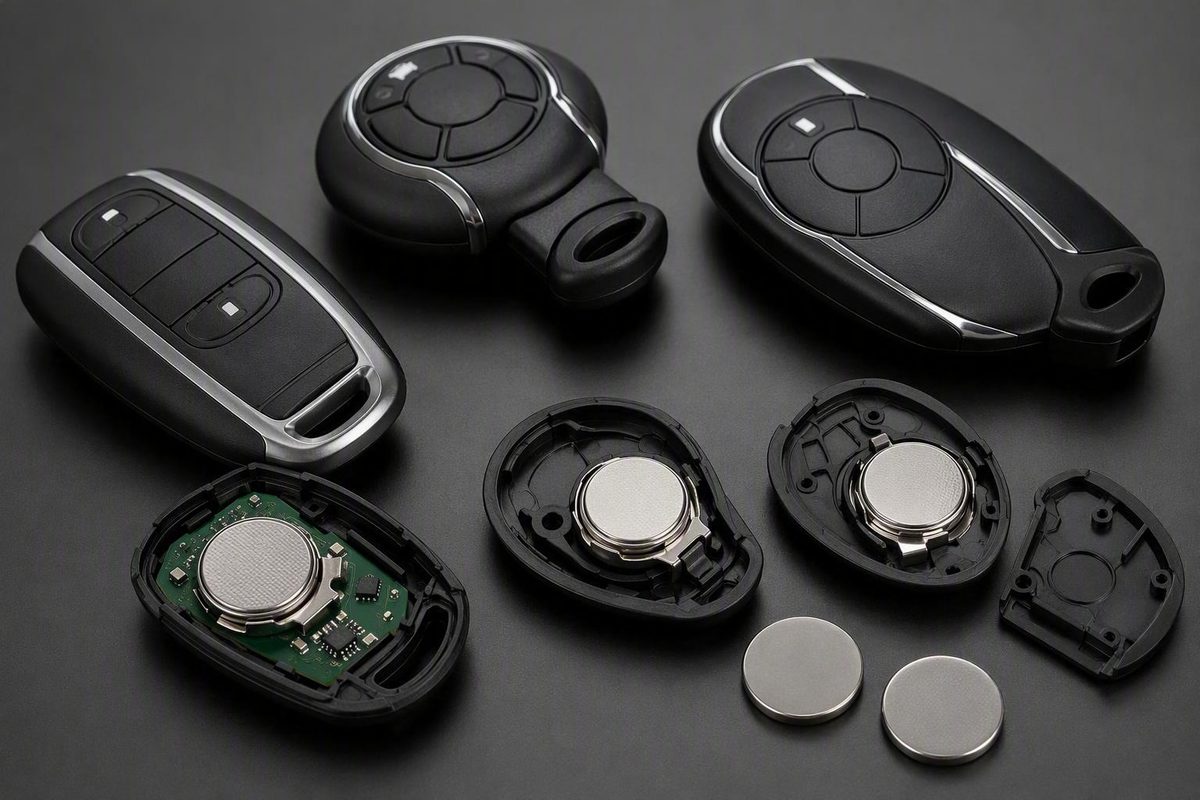
Identify your MINI fob’s opening mechanism, follow the matching CR2032 procedure and check polarity and seating before replacing a key that still works.
Several MINI keys use a CR2032 battery, but their covers open differently. Match your fob to the mechanism below before applying a tool. Confirm the cell code and polarity inside your own key; a sealed rechargeable key is a different repair.
The useful distinction is the opening mechanism, not simply the word “MINI” or a guessed model-year range.
Identify The Cover Before Opening It
| What you can identify | Appropriate next step |
|---|---|
| Removable outer cover and a round battery lid designed to turn with a coin | Use the current MINI coin-lid procedure below |
| Round fob with a silver side button and a removable metal key, matching the dealership’s illustrated guide | Use the round-fob procedure below |
| Different housing or an unclear opening point | Find the exact vehicle and key instructions in the owner’s manual |
| A sealed housing or soldered battery | Do not treat it as an ordinary removable coin-cell replacement |
MINI provides an owner-manual archive. Match the vehicle and key shown there, especially if your remote is a replacement rather than the original key.
For A Cover With A Coin-Operated Battery Lid
MINI’s official vehicle-key battery instructions describe this sequence:
- Hold the release button and disengage the outer cover from its lower and upper locking points.
- Turn the battery-compartment lid counterclockwise with a coin.
- Remove the old cell.
- Fit a CR2032 3V cell with its positive terminal facing upward.
- Turn the lid clockwise until its alignment arrows meet.
- Refit the outer cover so both locking points engage.
Use this sequence only if your key has the described cover and turning lid. A snap-fit compartment should not be twisted as though it had a coin-operated closure.
For The Documented Round Fob With A Removable Key
Motorwerks MINI’s illustrated round-fob guide describes a different opening method:
- Press the silver side button and withdraw the integrated metal key.
- Use the key at the designated opening point to release the outer casing.
- Release the inner battery-compartment cover.
- Photograph the installed cell’s code and orientation before removing it.
- Push the old cell toward the center to release it from the holder.
- Install the matching CR2032, positive side up for this documented design.
- Refit both covers and return the metal key to its housing.
Stop if the housing does not match the illustrations or the cover resists gentle pressure. An exact diagram is more useful than trying several seams until something opens.
Check The Cell Before Closing The Key
Copy the complete battery code, not just its diameter or the first few characters. Different coin-cell designations are not interchangeable instructions. If the old battery looks loose or improvised, use the exact manual specification instead of assuming the previous installation was correct.
Before closing the housing, check that the battery is seated in its holder, the contact points are undisturbed and the polarity matches the applicable instructions. The covers should align without being squeezed past an obstruction.
Take the used battery to a suitable collection point; MINI’s instructions also identify service centers as a disposal option.
If A Fresh Battery Does Not Restore Operation
Test the key close to the vehicle. If it remains unresponsive:
- Recheck the cell designation and orientation.
- Check for packaging or an insulating tab left on the new cell.
- Reseat the battery and make sure the covers close correctly.
- Try another fresh cell of the same specification if the first replacement may be defective.
- Use model-specific guidance if the problem remains.
Changing a removable cell is different from programming a replacement key. Do not start a generic button sequence or buy another remote merely because one battery change failed. If you find a sealed rechargeable assembly, visible damage or corrosion, stop the coin-cell procedure and arrange appropriate diagnosis.