
One Key Won’t Crank the Car, but the Other Works
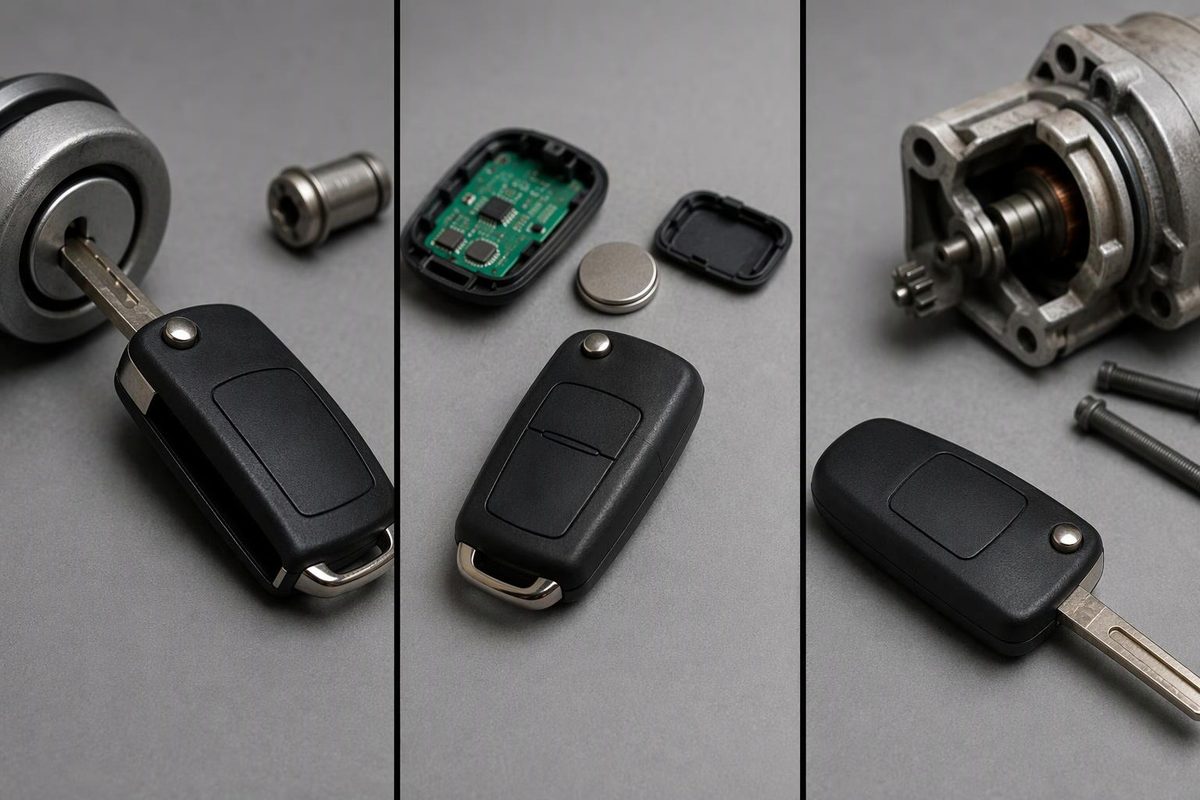
Separate a key that won’t turn, a key the car won’t recognize, and a true no-crank fault before paying for cutting, programming or starter repairs.
If one key consistently starts the engine and the other does not, investigate the failing key first—but establish exactly what it fails to do. A blade that won’t turn, an unrecognized electronic key, and an engine that turns over without starting need different checks. Replacing the starter or buying a fob battery before making that distinction can miss the problem.
1. Identify the symptom, then repeat the comparison
Note your vehicle’s year, make and model, and whether it uses a conventional ignition key or push-button start. With the vehicle safely parked outdoors and the parking brake applied, test each key separately using the same starting procedure. Keep the other smart key well away from the vehicle—not in your pocket or just beside the door—so it cannot authorize the start instead.
Record what happens with the failing key:
| What you observe | Which branch to follow |
|---|---|
| The blade will not turn, or cannot reach START | Mechanical key/lock checks |
| The key turns or you press START, but the engine does not turn over | Recognition and no-crank checks |
| The engine makes its normal repeated starting sound but never runs | Crank-but-no-start diagnosis—not a true no-crank |
| Only the remote-start button fails; starting from the driver’s seat works | Remote-start troubleshooting, not this diagnosis |
If practical, check the working key again after the failed attempt. A repeatable working–failing–working result is stronger evidence of a key-specific problem than one successful start yesterday. If both keys now fail, stop treating the key as the only suspect.
2. If the blade will not turn
Compare the failing blade with the working one. Look for bending, visibly rounded cuts or a replacement blade that differs from the original. A worn or bent blade can fail to align with the ignition cylinder; AutoZone’s ignition-key guide identifies these as mechanical causes and recommends trying the spare for a worn key.
Also check that an automatic transmission is fully in Park. If the steering wheel is locked, try gentle movement of the wheel while applying light turning pressure to the key. Steering-lock tension is another possible reason a key will not turn. Do not force the blade.
Stop point: If the spare turns normally but the suspect key still binds, ask an automotive locksmith to inspect the blade and lock fit. Do not hammer the key straight, file its cuts or force it with pliers. Programming is not the first repair to request for a blade that physically cannot turn. The lock cylinder may still need inspection; a working spare does not prove the cylinder is unworn.
3. If the key turns but the engine will not crank
Watch the security indicator and record any exact dashboard message. Compare its behavior with the working key rather than assuming every illuminated security symbol means the same thing.
An immobilizer can prevent cranking on some vehicles. Ford service information for the 2008 Mustang describes PATS controlling both starter and fuel-injector authorization. A PATS no-start can involve the starter not operating, the injectors not operating, or both; damaged, unprogrammed and non-encoded keys are among the listed causes. That explains how one key can turn the ignition yet produce no crank—but it is not a universal description of every car’s immobilizer. See the Ford service excerpt hosted by The Mustang Source.
Before arranging programming:
- Test the suspect key by itself. Remove other coded keys and nearby electronics from its key ring. Ford’s 2016 Lincoln MKT manual warns that a second coded key, metallic objects or electronic devices close to the key can cause starting problems.
- Establish whether it ever started this car. A newly cut key that has never started the vehicle needs its electronic compatibility and registration checked, not just its blade. The same Lincoln manual requires a coded key programmed to the vehicle.
- Report recent work. Tell the technician if failure began after key cutting, a case replacement, programming or vehicle electrical work. That history helps target the inspection; it does not establish the cause by itself.
For push-button vehicles, use the exact backup-start method in your owner’s manual. Ford’s Intelligent Access backup-slot guidance says the slot allows starting when the key battery has no charge or its frequencies are jammed. Its location varies by model and year.
If the suspect fob starts the car only through that backup method, check its battery and normal detection before paying for programming. If it still fails while the spare works, request key-recognition diagnosis. Test starting authorization directly; successful remote unlocking alone is not a sufficient starting test.
4. Choose the repair from the result
Bring both keys and your recorded symptoms to the locksmith or dealer. Ask them to confirm the failing key’s compatibility and whether the vehicle recognizes it before quoting replacement or programming. Owner programming is model-specific: the 2016 MKT’s spare Intelligent Access key procedure, for example, requires two previously programmed Intelligent Access keys and directs owners without them to a dealer. See when DIY car-key programming is supported.
If the no-crank failure becomes intermittent with either key, request vehicle-side starting-system diagnosis rather than assuming one key is faulty—even if no recognition warning appears. The successful spare makes a permanent starter failure less likely; it does not rule out an intermittent electrical fault.
If the engine actually cranks but will not run, describe it that way when booking service. Key authorization can still be relevant on some models, but “won’t crank” would send the diagnosis down the wrong branch.