
Chevrolet Cruze Key Fob Replacement: What Must Match
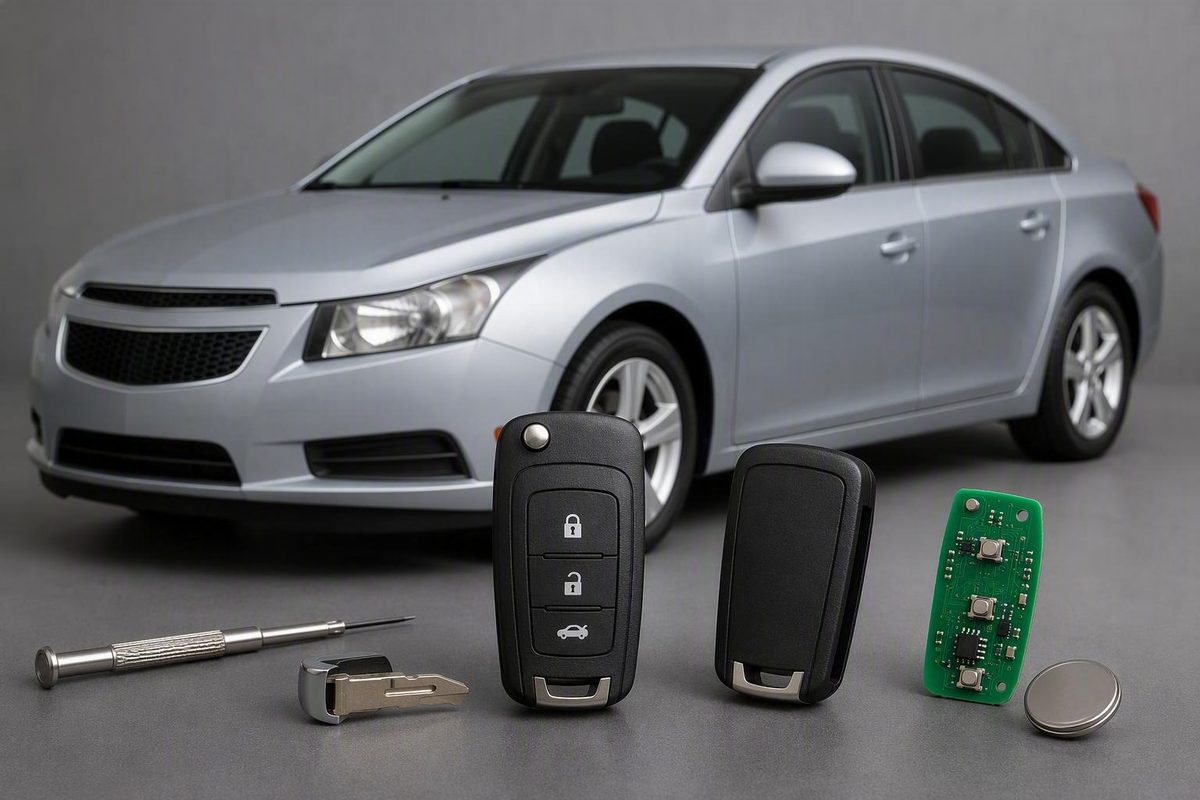
Identify the Cruze fob, buy the correct transmitter, arrange key cutting and programming, and remove a lost key from the vehicle’s memory.
A Chevrolet Cruze key fob replacement is not a shape-matching purchase. The replacement must fit the car’s access and ignition system, operate the intended options, accept the correct emergency or ignition blade, and be programmed to that specific vehicle.
Start by separating a weak battery from an actual replacement problem. If the case and buttons are intact and the fob works only at close range or intermittently, try the correct new coin cell first. If you need battery-opening guidance, the same verify-before-opening approach is covered in our Chevrolet Equinox battery guide. Replace the whole fob when it is missing, physically broken, water-damaged, or still nonfunctional after basic battery and contact checks.
Identify the Cruze and key system first
Record these details before shopping:
- Model year and VIN
- Country where the car was originally sold
- Turn-key ignition or push-button start
- Flip-key transmitter or keyless-access fob with a removable mechanical key
- Exact button layout, including trunk and remote start
- Numbers printed on the original fob, including its GM part number and FCC ID when legible
- Whether at least one working, recognized key remains
Do not assume every Cruze from a given year uses one remote. Chevrolet’s 2017 manual depicts both a flip key and a keyless-access transmitter; it says the flip blade operates the ignition and locks, while the removable key in the keyless-access fob operates the locks. It also treats remote start as optional equipment (2017 Cruze Owner’s Manual). Chevrolet’s 2018 manual likewise documents separate flip-key and keyless-access systems (2018 Cruze Owner’s Manual).
The safest buying method is to have a Chevrolet parts department or qualified automotive locksmith identify the transmitter from the VIN and then compare that result with the original fob’s identifiers and buttons. A listing that merely says “fits Chevrolet Cruze” is not enough.
Account for all three jobs
A complete replacement may involve three distinct tasks:
- Transmitter compatibility: The electronics must be correct for the vehicle and its installed features.
- Mechanical-key cutting: A flip-key blade must operate the ignition and locks; a removable emergency key must operate the lock. Programming does not cut the blade.
- Vehicle programming: The Cruze must learn the new electronic credential. A cut blade alone may provide mechanical entry without supplying the credential required for normal starting.
Ask for an itemized quote covering the fob, blade, cutting, programming and service-call fee. Also ask whether the provider guarantees that its supplied fob will program to your VIN. This makes dealer, locksmith and online-fob offers easier to compare without treating unlike packages as equivalent.
Choose the programming path by model and working-key status
Do not use a generic GM reset sequence. Follow the “Programming Transmitters to the Vehicle” or “Programming Keys” section in the owner’s manual for the exact model year, ignition type and sales country.
For example, the 2014 Cruze manual gives a short learning procedure for a turn-key vehicle when an already programmed key is available: cycle the recognized key on and off, remove it, then insert and turn the new key on within five seconds. The same manual says the no-recognized-key procedure takes about 30 minutes, erases previously known keys, and—under Canadian regulations—requires owners to see a dealer (2014 Cruze Owner’s Manual, p. 36). Those instructions should not be projected onto later Cruzes or a different ignition system.
The 2014 manual separately describes keyless-access programming. With a recognized transmitter, it uses the console transmitter slot, the driver-door lock cylinder and the start/stop button. It also says all recognized and new transmitters must be present; its no-recognized-transmitter feature is unavailable in Canada (2014 Cruze Owner’s Manual, p. 37).
Stop and use a dealer or an automotive locksmith with suitable programming equipment when:
- Your manual does not provide a procedure for the exact configuration
- The procedure requires equipment you do not have
- No recognized key remains and the country-specific manual restricts owner programming
- The replacement will not enter programming mode or will not start the car
- You cannot verify the replacement’s compatibility
If the old fob was lost or stolen
Do not only add a replacement. Ask the programmer to remove the missing credential from the vehicle’s memory and then verify every key you still possess. Chevrolet’s 2014 manual says the vehicle can be reprogrammed so lost or stolen transmitters no longer work, but the remaining transmitters must then be reprogrammed (2014 Cruze Owner’s Manual, p. 36).
Electronic removal does not recover the physical blade. If theft rather than simple loss is a concern, ask the dealer or locksmith what additional mechanical-lock or security work is appropriate.
Test before accepting the job
Before leaving the counter or allowing a mobile technician to close the work order, test every supported function:
- Mechanical entry with the newly cut blade
- Lock and unlock from several positions
- Trunk release
- Panic button
- Remote start, if the Cruze is equipped with it
- Passive door-handle entry, if equipped
- Engine start several times
- Every old key that should remain authorized
If the remote buttons work but the engine will not start, or the engine starts but passive entry fails, report the exact split in symptoms. That distinction helps the provider check programming, key type and vehicle-side faults instead of replacing another battery or fob without diagnosis.