
Why Your Explorer’s Driver Seat May Move When You Unlock It
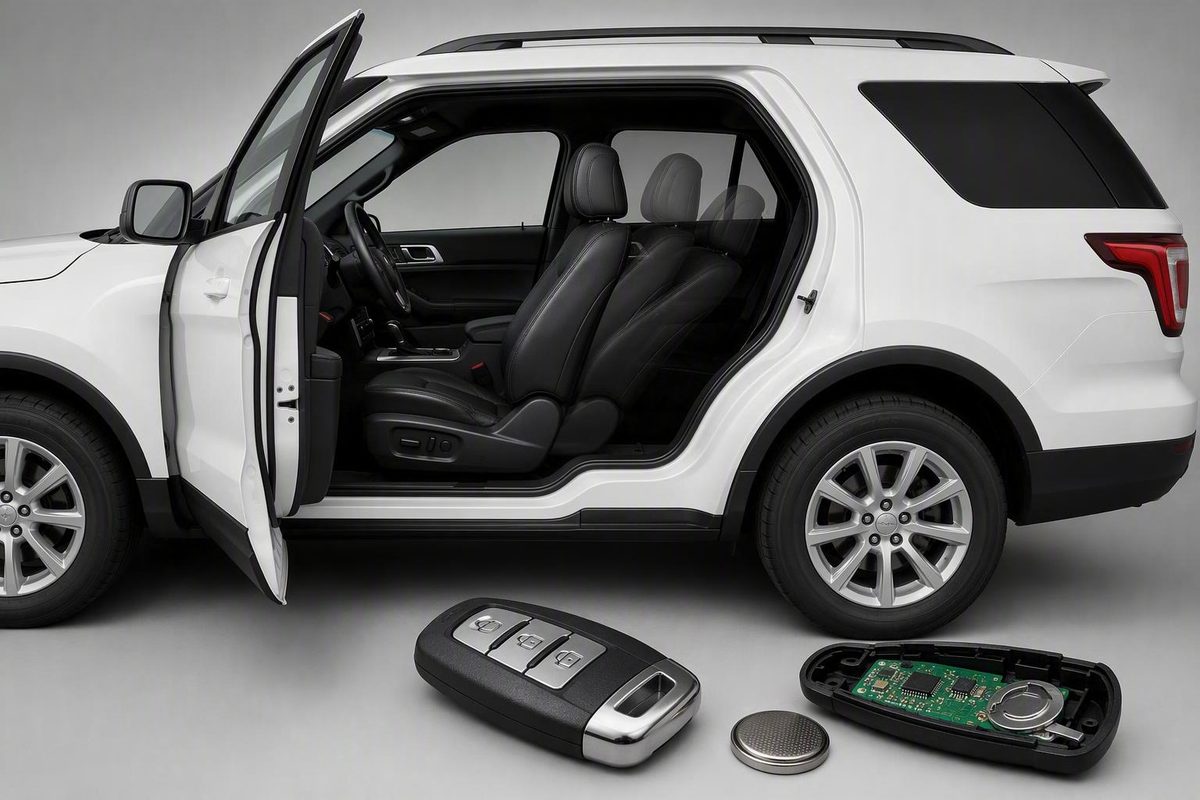
On affected vehicles, unlock, remote start, or key-fob proximity can initiate memory recall tied to faulty recline-motor behavior.
Yes. In certain recalled 2026–2027 Ford Explorers, unlocking, remotely starting, or approaching the parked vehicle with a programmed key fob can reportedly initiate a faulty memory-seat sequence that reclines the unoccupied driver’s seat. This is a reported U.S. recall condition, not evidence that every Explorer—or every unexpected seat movement—has the same defect. First determine whether the seatback is reclining or the seat base is simply sliding along its tracks.
The short answer: certain 2026–2027 Explorers are affected
The reported U.S. recall is identified as NHTSA campaign 26V470 and Ford recall 26S53. Reports summarizing Ford and NHTSA documents place its scope at 64,409 Ford Explorers and 15,170 Lincoln Aviators, totaling 79,579 vehicles from the 2026 and 2027 model years. Those figures do not mean every vehicle from either model year is included in the reported campaign.
Model year alone cannot confirm coverage. The VIN record should control over assumptions based on trim, equipment, or model year. Owners outside the United States should check with Ford and the applicable national transport-safety authority because the evidence here establishes only the reported U.S. campaign scope.
At the time the cited reports were published, Ford was still developing a remedy. That is a historical status rather than confirmation of current repair availability, parts availability, or notification timing. Check the current official campaign record or ask a Ford dealer what is available for your VIN now.
What triggers the movement—and what reportedly causes it
Unlocking is a trigger, not the underlying mechanical cause. In an affected vehicle, an unlock, remote-start, or proximity event can initiate the seat’s memory-recall function. Reports attribute the defect to an interaction between that function and affected recline-motor behavior following a supplier change.
| Trigger or condition | Reported behavior |
|---|---|
| Remote unlock | Can initiate memory recall while the affected vehicle is parked |
| Remote start | Can initiate the same sequence while parked |
| Approach with a programmed fob | Passive key detection can reportedly initiate memory recall |
| Driver’s seat unoccupied | Reports describe the unexpected reclining under this condition |
| Vehicle above 3 mph | Memory recall reportedly cannot activate above this speed |
The affected seatback may continue moving rearward until it meets resistance, then stall rather than reverse. The reported supplier change, campaign identifiers, memory-recall sequence, and 3 mph operating limit are described in TFLcar’s recall summary.
A weak key-fob battery is not the reported cause. The fob can provide the unlock, remote-start, or proximity signal that starts the sequence, but that does not make the fob or its battery defective. Replacing or reprogramming the fob is not a repair for the reported seat condition.
Normal seat-base movement versus abnormal reclining
Start by identifying which part of the seat moves. A seat base sliding rearward on its tracks is different from the seatback changing angle.
| Normal Easy Entry and Exit | Reported recall symptom |
|---|---|
| The driver’s seat slides rearward by up to two inches after ignition-off. | The driver’s seatback changes angle or reclines unexpectedly. |
| The seat returns to its previous position after ignition-on. | Movement may begin after remote unlock, remote start, or approach with a programmed fob. |
| The movement creates more room for leaving or entering. | The seatback may move toward the driver-side second row. |
| It is a selectable feature on equipped vehicles. | It is uncommanded behavior reported in certain recalled vehicles. |
Ford describes Easy Entry and Exit as moving the driver’s seat rearward by up to two inches after the ignition is switched off, then returning it when the ignition is switched on. Ford’s guidance does not identify unlocking as the trigger and does not describe the seatback automatically reclining.
Feature availability, behavior, and controls can vary by model year, trim, options, and equipment. Consult the owner’s manual for your exact Explorer rather than following a menu path written for a different model year.
What to do now if your Explorer’s seat reclines by itself
As a cautious interim measure, keep passengers, pets, and cargo clear of the driver-side second-row area before unlocking, approaching, or remotely starting the vehicle. Do not deliberately test the movement with a person or object behind the driver’s seat. This precaution responds to the reported risk that the seatback may press against or trap a second-row occupant because the motor can stall instead of reversing when it encounters resistance; it is not an official repair. The reported movement and second-row entrapment concern apply to the specific recall condition, not every power-seat complaint.
Document what happens without creating another hazard. Record:
- The model year and VIN
- Which programmed key fob was present or used
- Whether the trigger was remote unlock, remote start, or passive approach
- Whether the ignition was off, on, or in remote-start mode
- The selected memory preset, if known
- Whether the seat base slid or the seatback reclined
- The direction and approximate duration of movement
- A video only if it can be recorded without placing anyone behind the seat
Check current Ford and NHTSA recall records for 26S53 or 26V470. Contact a Ford dealer if the VIN is included, the lookup result is unclear, or the movement continues without explanation. Ask the dealer to confirm the current remedy status for that specific VIN rather than relying on the historical status in a news report.
Do not treat disabling remote start, passive entry, memory recall, or Easy Entry and Exit as an official repair. Changing a setting might alter when the symptom appears, but it does not prove that the underlying condition has been corrected.
If you have a 2025 or older Explorer
Unexpected reclining in a 2025 or older Explorer does not establish that the vehicle has the defect reported for certain 2026–2027 models. Similar symptoms can involve different triggers or components.
Owner discussions have raised memory presets, key-fob-linked driver profiles, Easy Entry and Exit settings, seat switches, and seat-controller software as possible diagnostic areas. These are anecdotal leads—not confirmed causes that apply to every older Explorer.
Use a low-risk observation sequence:
- Determine whether the seat base slides or the seatback reclines.
- Note whether movement follows unlocking, opening the door, switching the ignition off, switching it on, or selecting a memory preset.
- Record which memory preset was active.
- If another programmed fob is available, observe whether the behavior changes when that fob is used.
- Review the memory-seat and Easy Entry and Exit instructions in the manual for the exact model year.
A settings change can help identify a trigger, but it is not a substitute for inspection when the movement is uncommanded. In one Explorer owner discussion, a driver reported that replacement of a door-mounted memory switch corrected delayed seatback movement after selecting a preset. Another owner reported that replacing switches did not resolve a similar complaint. That conflicting experience is not a sound basis for choosing a replacement part without diagnosis.
Arrange prompt dealer inspection if the seat moves while occupied, continues moving unexpectedly after the settings have been reviewed, or could trap a passenger, pet, or object.
Frequently asked questions
Will replacing the Ford Explorer key-fob battery stop the seat from reclining?
Not if the movement is the condition reported under campaign 26V470. The key fob may provide the unlock, remote-start, or proximity signal that initiates memory recall, but the reported defect involves the seat-memory and recline-motor sequence—not a weak fob battery.
Replace the battery if the fob has separate low-battery symptoms, such as poor range or inconsistent button operation. Do not expect a battery replacement or fob reprogramming to correct uncommanded seat reclining.
For a 2026–2027 Explorer, keep the driver-side second-row area clear and check the VIN for 26V470 or 26S53. For an older Explorer, document the exact movement and trigger and arrange diagnosis rather than assuming the recall applies or replacing key-fob parts.