
U3000:42 Is a Module Memory Code, Not a Key-Fob Diagnosis
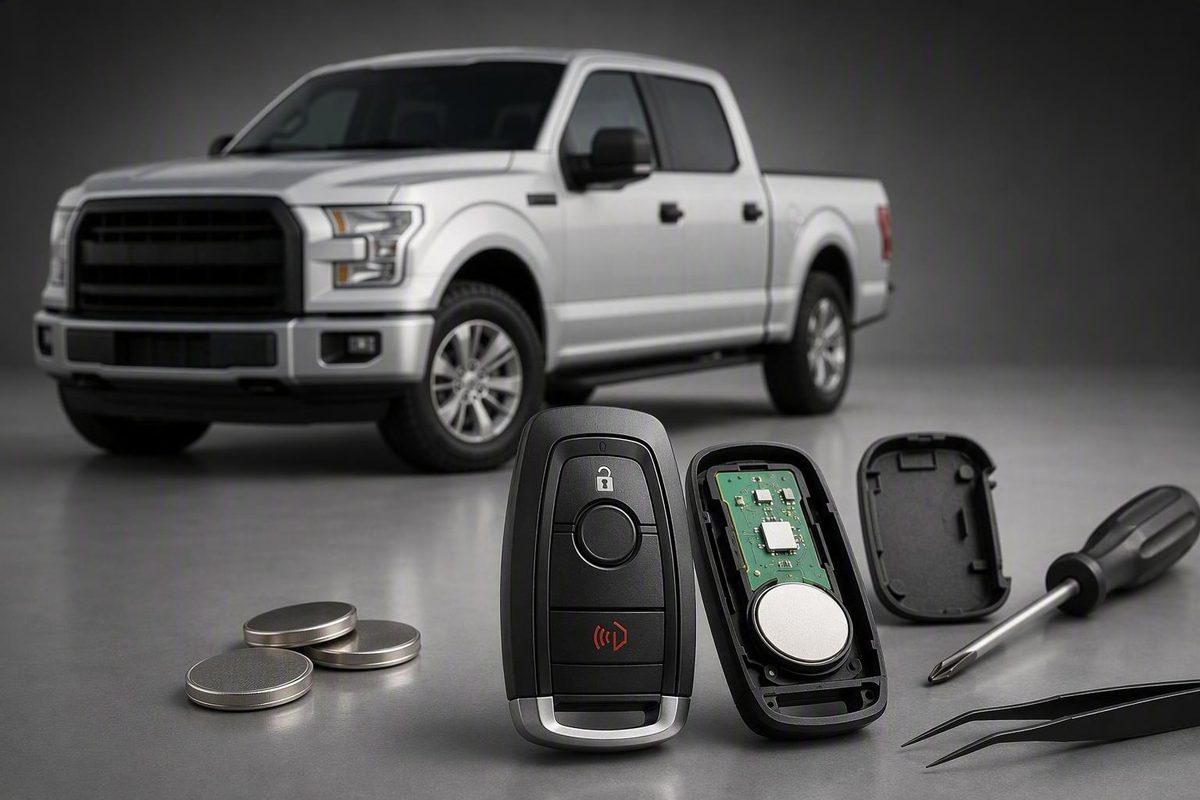
How to interpret a continuous-memory U3000:42 code on a 2017 Ford F-150 XLT, identify the reporting module and avoid unnecessary fob work.
The complete code is U3000:42, not U300. Ford describes it as “Control Module: General Memory Failure.” It points to an internal memory concern reported by an electronic module; it does not, by itself, identify a bad key fob, receiver or body control module. Ford diagnostic charts list the module separately from the code—for example, the same U3000:42 description can appear under the audio control module (ACM) or digital signal processing module (DSP) (Ford workshop information).
That makes the scanner’s module name the most important missing detail.
What “continuous memory” means
“Continuous memory” is the code’s status, not another failure description. Ford diagnostic material explains that continuous self-testing remains active and can retain a fault that is not present when the truck is scanned. That makes these codes useful for intermittent problems, but it also means a stored code is not proof that the fault is active now (Ford OBD diagnostic documentation).
Before replacing anything, save the full scan report. It should show:
- U3000:42 with every suffix or status byte the tool provides;
- the reporting module, such as ACM, APIM, BCM or another abbreviation;
- whether the code is current, previously set or continuous-memory only;
- all other codes in that module and across the truck.
A basic reader may translate the code without clearly naming its source. If so, repeat the scan with a Ford-capable tool or ask a repair shop for a complete module report.
Use this check sequence
-
Match the symptom to the reporting module. An ACM code alongside radio trouble leads in a different direction from a BCM code alongside inoperative locks. Do not assume “U” means the problem is automatically in the keyless-entry system.
-
Record, clear and retest once. Save the original report, clear the code, switch the truck off, restart it and operate the affected feature. Rescan. A code that immediately returns in the same module deserves module-specific diagnosis; a history code that does not return should not justify replacing a module on its own.
-
Check the truck’s electrical condition. Before condemning electronics, have the 12-volt battery, charging performance, related fuses, module power feeds, grounds and connectors checked. Do not disconnect modules or probe connectors without the correct wiring information, particularly around restraint or steering systems.
-
Use the exact 2017 F-150 workshop procedure for that module. U3000:42 is too broad to supply a universal repair. Diagnosis may call for software checks, power-and-ground tests or an internal-module decision, depending on which controller stored it. Module replacement should be the result of that procedure—not the first response to the code.
Is U3000:42 causing the key-fob problem?
Possibly, but the code alone does not establish that connection. Separate the functions before troubleshooting:
- Remote buttons: Lock, unlock, panic and remote start use the transmitter portion.
- Starting authorization: A keyed truck uses its coded-key/immobilizer function; an Intelligent Access truck must detect the key in the vehicle for push-button starting.
- Emergency entry: The integrated key blade or the removable blade in an Intelligent Access fob mechanically unlocks the driver door.
Ford’s 2017 manual explicitly distinguishes these functions: the integrated key blade starts the vehicle and unlocks the door while the transmitter portion serves as the remote control; the Intelligent Access fob contains a removable mechanical blade (2017 F-150 Owner’s Manual).
Try the spare fob, if available. If only one remote fails while the other works normally, inspect that fob and its battery first. If both remotes fail in the same way, or other body functions fail too, the vehicle side becomes more suspect. Follow the correct 2017 F-150 fob battery procedure only when the symptoms point to a weak remote battery.
The manual specifies one CR2032 for the integrated keyhead transmitter but two CR2025 batteries for the Intelligent Access transmitter. It also says that battery replacement does not delete the transmitter from the vehicle (2017 F-150 Owner’s Manual). Therefore, changing a fob battery is not a repair for a module’s U3000:42 memory fault, and routine reprogramming should not be the next step merely because this code appeared.
If a compatible keyed-ignition remote truly needs button pairing, the F-150 eight-cycle programming method and its limits are separate from diagnosing U3000:42. If the code returns, bring the saved scan report—including the module name—to a Ford-capable technician so the correct module can be tested before any parts are authorized.